0 / 5000
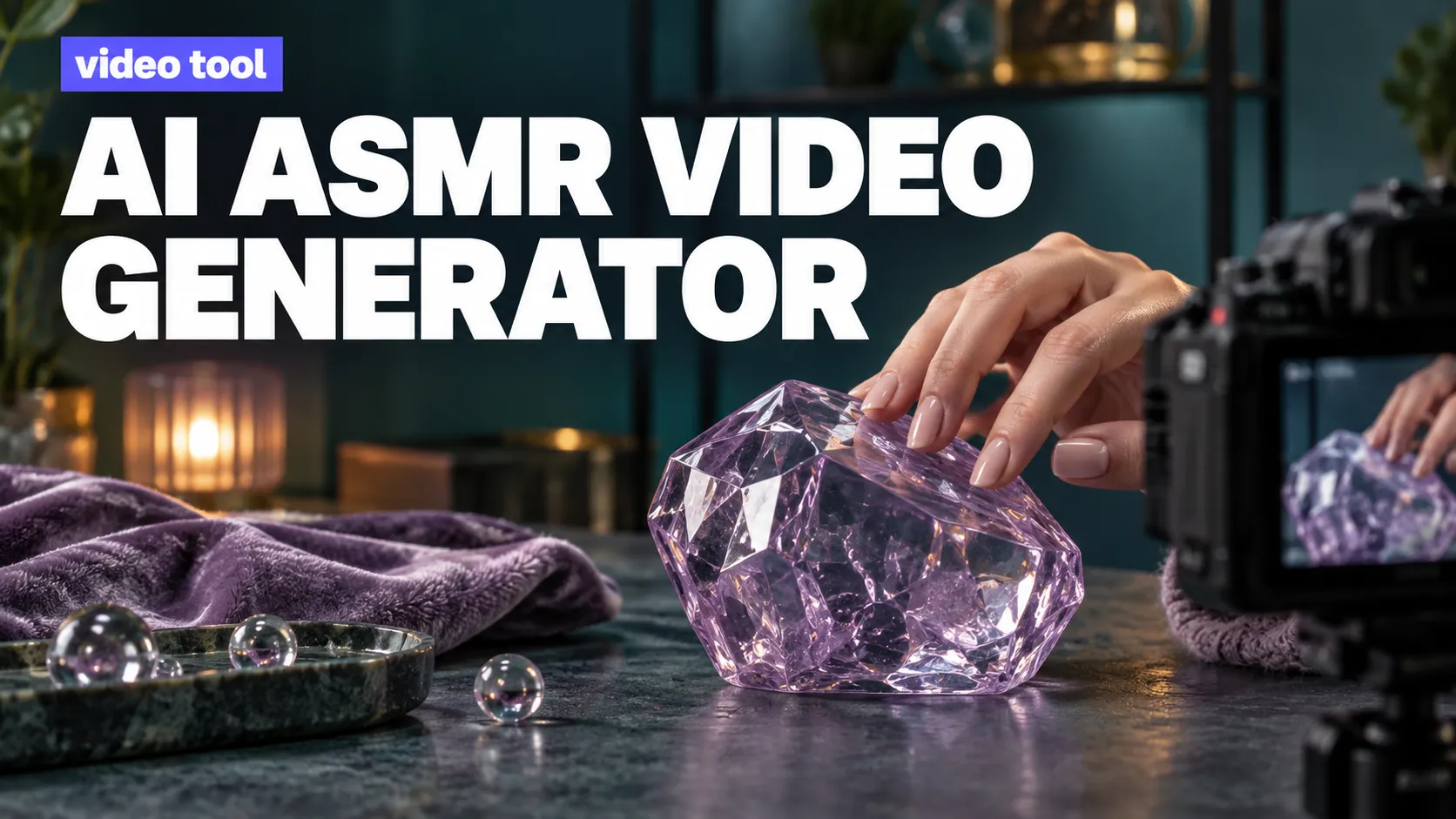
AI ASMR Video Generator with Satisfying Templates
Turn an image or a scene idea into a satisfying ASMR video. Explore cutting, tapping, sand, and slime templates, then describe the motion and sounds you want with UGC Maker AI.
Explore AI ASMR Video Examples
Watch ice, liquid, and chocolate textures in motion, and copy a prompt to create your own ASMR clip.
Original Image

Prompt
15-second 16:9 reference-image-to-video ASMR video. Begin from the exact reference-image composition and retain the glass vessel, ice geometry, liquid colors, and cool studio lighting. No labels, text, logos, face, or drinking action.
0–2s: a clear square ice cube is placed into the empty glass with a crisp resonant clink.
2–4s: a thin stream of cobalt-blue liquid flows around the ice and fills the lower third of the glass.
4–7s: a second stream of amber liquid enters from the opposite side, forming visible swirling boundaries without instantly mixing.
7–9s: a glass stirrer turns once; the colors spiral around the cube in layered ribbons.
9–11s: a second ice cube drops in, displacing the liquid and creating a controlled ripple against the glass.
11–14s: condensation beads form and slide down the outer surface while the internal colors settle into a rich gradient.
14–15s: close macro of one bead rolling downward, ending on a clear glass chime.
Camera: extreme macro at glass height, slow focus transition from the pour to the condensation bead. Audio: precise ice clinks, liquid pour, glass stir, no music, no voice.
Video
Direct the Details of Your ASMR Clip
Use a focused scene, deliberate motion, and a clear sound description.
Satisfying Prompt Templates
Start with glass fruit, kinetic sand, slime, or tapping, then change the material, subject, or pacing in the prompt.
Image-to-Video Creation
Upload an image to guide the opening appearance, and describe how the subject should move.
Sound with Compatible Models
Describe the contact sounds you want and generate them with an audio-capable model. Keep audio enabled when the selected model offers an audio switch.
Review Your Variations
Compare generated clips in your video history and refine the prompt for the motion, framing, and sound you prefer.
Explore Satisfying Video Ideas
Build a short clip around one tactile action.
Cutting and Slicing
Explore smooth cuts, layered materials, and close-up textures with a deliberate camera angle.
Sand and Soft Materials
Try granular crumbling, gentle compression, and neatly arranged shapes with restrained movement.
Slime and Bubble Textures
Describe slow stretching, folds, and small pops to guide a tactile visual and audio concept.
Tapping and Object Sounds
Focus on light contact, surface texture, and a quiet scene with a steady composition.
How to Make an AI ASMR Video
Start with a template and guide both the action and the sound.
Choose a Template and Image
Select an ASMR preset and upload an image if you want to guide the subject and starting composition.
Describe Motion and Sound
Edit the prompt with a specific action, pacing, and sound. Use an audio-capable model and enable audio when the model offers a switch.
Generate and Listen
Generate your clip and review the video with sound. Adjust the prompt or model settings if the timing or texture needs refinement.

Explore More AI Creative Tools
Build your next visual idea with image and video tools on UGC Maker AI.




Read MoreShow Less







AI ASMR Video Generator FAQs
More Articles about AI ASMR Videos
Loading...